
The formal diagnosis, which we reached after months of testing, is inconclusive. It could be myalgic encephalomyelitis, Chronic Fatigue Syndrome. It could be a condition derived from the virus, which we still can't fully understand. It seems like an invented illness to avoid working. I always liked to work, from medical school, the first residencies, the long and repetitive rounds. That's where we met, Isabel. One sick body after another, one complaint after another, one pain that inevitably follows another pain. I worked without stopping even when, having decided on general medicine, my schedule was calm and diurnal. I worked the way doctors work, ignoring my own physical weaknesses as if knowing about them guaranteed me an exemption.
The day I came to see you at your office, you told me that after the pandemic, neurological diagnoses exploded, symptoms of the central nervous system, all the short circuits between the body and its brain impulses. A mix of disorders that could be part of the virus, or from the trauma of the virus. That day we spoke in very technical terms, of course, as colleagues. But later I had time to tell you that it all began with Mario's death, that he was one of the first victims of the end of the world.
Since Mario liked to work at night and I liked to work during the day, we had little time together. The five years we lived together are made of coincidences, of a synchronization of schedules that sometimes seemed more left to chance. We met working together at the hospital, and in the future we would have children, trips, other things. For now we were like clandestine lovers, with limited encounters. This meant we knew each other less than other couples, that we were always a bit strange to each other and thought we would have our whole lives to get to know each other well. Our whole lives.
I know that post-traumatic stress syndrome is one of the elements of chronic fatigue, but not the only one. Something was happening to my cells, I felt like I was dying slowly from tissue to tissue. After the disability from Mario's death came another disability because I couldn't get out of bed except to drag myself to the bathroom, to open the door for Doña Rocío so she could wash the dishes and make me some food for the whole week. There were tests, inconclusive diagnoses, everyone went around and around the problem. Doña Rocío is the one who, to this day, keeps me alive.
Mario died in the first wave of local virus infections, in a public hospital where panic overflowed any medical and logistical capacity. He was an emergency room doctor, and that's where he got infected, from someone who was also dying but we still didn't really know from what. He always liked the night shift, which was the worst, full of gunshot wounds and the constant drip of overdoses that the city generates. Suddenly doctors and paramedics were getting sick. Intensive care space was running out, we had to talk to the director, to the director's boss, to the health minister. Transfers, arrangements, screams of impotence. You remember.
One medical privilege that other people didn't have is that I was able to go see how Mario slipped from my hands in the hospital. The last words, sighs, intimacies, little pet names, we were able to say them all to each other through sterile protective barriers. At least we didn't have to share all that the way others did, by phone, while a nurse did you the favor of showing you your husband, your best friend, your mother or your son, dying with a scarce mask, with oxygen that was needed for other patients, for others less condemned to death.
From then on I began to feel a heaviness in my bones, an endless fever that came and went. It was grief. It wasn't a new sensation because I had already traveled this labyrinth several times, lost for months, and then coming out very slowly always touching the left wall. Time was taking me down the right path. But what happened to me with Mario was different from death.
Isabel, I sought you out because six months of immobility had already passed. Sometimes I would receive an email from work, where they were trying to figure out how to fire me without getting into so many legal problems. They needed hands. People were still dying. I didn't make their task easier because I was too exhausted to respond to an email. I would think of a response, close my eyes, never open them again. I needed a ruling, a long-term justification.
The specialists, including you, advised me to set achievable goals. For example, it was your idea that I get dressed and go for a walk around the park near my house, going up a small hill from where you can see in the distance how the city spreads toward the center of the valley. I managed to do it once a week. Halfway through, the slope turned into a complete mountain to climb. I would rest. Catch my breath. My lungs burning, I would imagine Mario dying like a fish out of water.
Once I managed to reach the top, I had a small mental celebration while trying to regain life on a bench. Around me people my age were running, pushing baby strollers, talking animatedly with their friends, some still wearing masks because this emergency never ends. A world foreign and forbidden by my body. That only made me more anxious.
I decided to start going to the park at night, when it was deserted and covered by the gleaming moon. No wonder Mario liked the night. Only the wind passes through the leaves of the trees, among the animals sleeping in their nests. No one runs, no one breathes with new lungs, no one plays on the swings or on the basketball court. The only thing that suddenly moved were the raccoons digging through the trash with their little black hands.
Isabel, the night has opened a door for me. My legs are starting to respond to the effort, to remember the rhythm of one step after another like I hadn't felt in months. My head wants to explode and I realize it's my heart, sending blood to my mobile extremities. One day after another, in the park, my body becomes mine again for a few ambitious minutes. Then I return home and imagine the future without Mario hurriedly, with my heart still beating in my mouth. When the sun comes up I fall asleep. The daylight returns the weight to my bones of everything that has happened, the time Mario and I spent together and his absence. The times we were in a bad mood, tired, destroyed by work.
In the park at night I begin to see the coyotes. There are two of them, they seem young and both male. I imagine they're brothers from the same litter who will soon have to separate. At first I thought they were the same one, but then I began to see the differences between them, and then I began to see them together. To them I don't have the form of prey but neither of predator. I'm a presence that walks slowly, trying to swallow the entire atmosphere, my eyes increasingly accustomed to the darkness. The coyotes watch me from a distance with the very short curiosity of teenagers.
During the day I dream of the night, on unknown scales. Sometimes from the height of the trees like a nocturnal bird, sometimes with insects that don't exist making their way through the grass and making little holes to burrow into the earth. Sometimes I still dream of Mario, breathing like a large mammal, while he undressed in the darkness. In my favorite dreams I'm a coyote, running through the tall grasses on the hill, chasing a mouse or a small opossum. In all these dreams I breathe deeply, I swallow oxygen with the lungs of another creature.
Isabel, I need to ask you when was the last time there was a case of lycanthropy. I know you're going to laugh. It's possible you know of an active and quite famous case I saw on the Internet, in the United Arab Emirates, of a man who turns into a tiger. I think I'm really turning into a coyote, beyond dreams. That at night I can walk, move my arms powerfully with the determination of someone seeking to eat to stay alive. At night while I take the second lap around the park, almost capable of a third, I greet the coyotes with the eyes of the same animal.
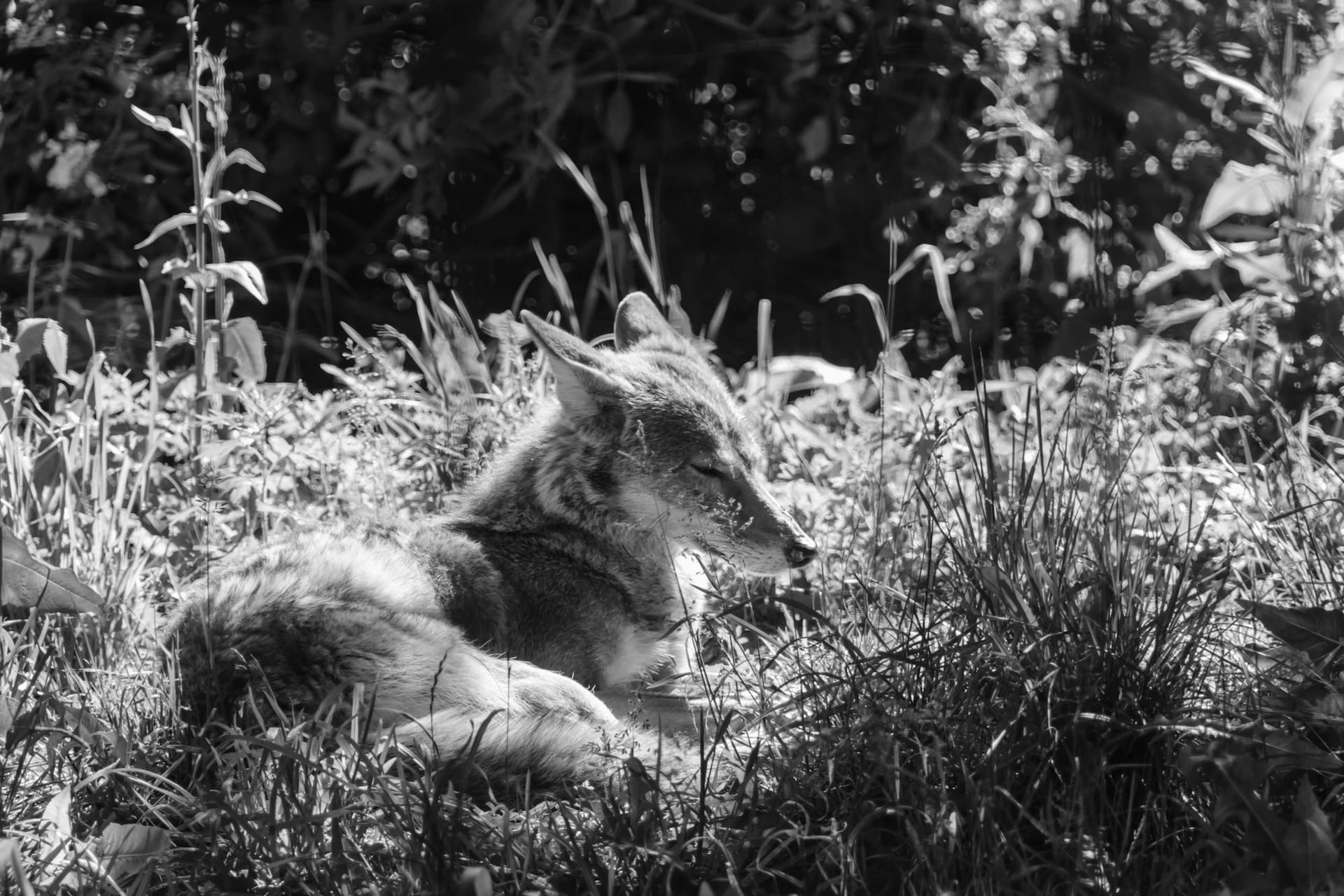
The weeks pass and I go to the park in increasingly warm temperatures. In medical publications they talk about the vaccine, a biochemical marvel created in record time. None of that matters to the stars, fixed in the sky. Now I make many laps, I know all the paths, the textures of all the trees. I sit under a tree and close my eyes to think about the future, about what's going to happen to me, to all of us. What we're going to do to cure ourselves of this terrible illness, of this continuous pain and the endless emergency. When I open them it's because the sun has risen and is hitting me in the face, like a direct ray. Next to me sleeps a coyote, curled up like a puppy, using one of its large paws as a pillow. It has soft ears and the rest of its fur is hard and thick. It smells like a wild animal, of the night that's ending.