
Right now you're probably thinking you made a mistake by innocently adding me on Instagram. Yes, Lucho, it was probably a mistake, because now this letter is in your hands. All of this will seem out of place and sudden to you, but what did you expect from me? It's been years since we've seen each other, but as you can imagine, there are things about me that were permanent, immutable, impossible to outgrow.
My clearest memory of you is from those first months we spent together at university, in the Computer Science department. You were different from the other guys, of course — we were all shy and withdrawn, while you were handsome and outgoing, the life of several parties I wasn't invited to. When you walked into the lab, driven by God knows what internal mechanism, the air in the room changed. To make matters worse, Jose Luis, it was obvious you were extraordinarily intelligent. That brain of yours announced the total destruction of my self-esteem. You did everything better than me, better than anyone. I fell in love with you instantly, something that has never happened to me since. But as always, I know now that I fell in love with a version of myself that didn't exist.
Do you remember how we used to kiss? Constantly, hungrily. Thinking about it now, we should have kissed even more. But don't get any ideas — I have no interest in kissing you anymore. This isn't that kind of letter. Sorry to disappoint you again.
Your Instagram tells me you're married with two beautiful daughters. I love your wife, who is younger than us — that's fine. (A perfectly reasonable age difference, Jose Luis, I'm not judging you.) I can see you live in the neighborhood where your parents lived, quite close to them. "How wonderful," I would tell you in person, "how reassuring to have the whole family together." These are things I say because people like to hear them; the idea of living there terrifies me. Your family already horrified me back then: your mother thought I had some kind of mental deficiency, we couldn't understand each other when the other spoke, as if we came from distant countries.
With you I managed to break out of my shyness and become a more or less normal girl for a while. I dared to step away from my computer for a few hours — my only friend. We never had money, always teetering on the edge of ruin, going out dancing on weekends to places that in daylight would have been monstrous, surrounded by flashing lights and electronic rhythms that echoed in your head for days. We'd go back with your friends to strangers' apartments and sleep sprawled across the floor or draped over grimy furniture. Two or three hours later we'd drag ourselves to our precarious jobs, completely destroyed.
We decided we were in love the way you decide to buy a used car. Your mother cried when we moved in together to the little apartment in Santa Clara. It was a small three-story building, and we lived on the second floor in just forty square meters. The building was full of families and old people who had been there their whole lives, sitting in chairs upholstered in plastic. We found half our furniture in the trash and inherited the other half from your older brother. We were happy for approximately one week, celebrating our new independence, eating sitting on the floor.
Then of course came all the other weeks. The real ones. We arrived home exhausted from work — you from the IT department of a multinational, me from a local software company run by petty tyrants. Back at the apartment we kept working, studying, reheating Chinese food in the microwave, each of us trying to disappear into the electronic pulse of our own headphones. The apartment shrank around us, and we couldn't move without the other noticing. I remember trying to romanticize even that, what was truly a miserable time. We suffered a great deal, though I can't quite recall whether it was because we were unhappy, or because everyone suffers at that age.
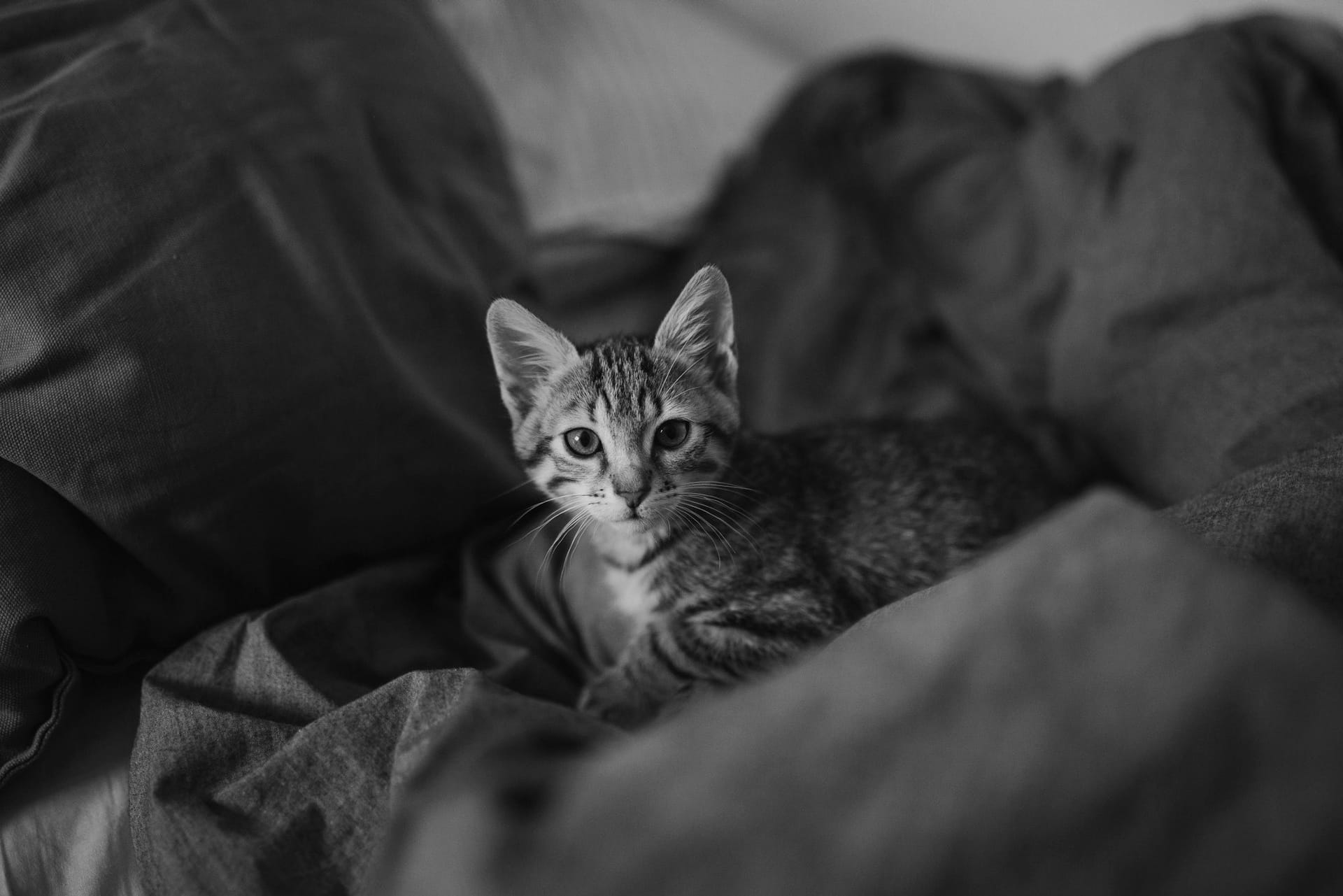
One day a kitten appeared at the building's entrance, clearly abandoned and barely newborn. We adopted it so quickly I thought it must belong to someone and we had stolen it. We were driving each other mad and needed to involve a third party. The kitten cried all night and I was desperate — I wanted to sleep, I wanted to run from that idiotic situation I'd gotten myself into. I wanted to be alone and in silence, ideally in the vacuum of outer space. The neighbors complained about the cat that wouldn't stop yowling. We'd find each other in the kitchen without speaking, at three in the morning, looking at each other like ghosts. We stopped kissing.
Your mother called every day. You'd go outside the building to talk to her, because there was no space to do it without me seeing your face. I'm certain you took her side. I stayed upstairs with the computer and the cat, who yowled because he didn't like me either. And of course, looking back now, I see us with such tenderness. We had no idea how difficult it is to live with another person, to know them at that almost indistinguishable level where you can't tell where one ends and the other begins. It's easy to fall in love with the imaginary version of yourself — the one who is happy without obstacles.
One day you came home from work and I was already gone, taking only my computer, leaving you one month's rent in a purple envelope on the pillow. I left you the way you leave two cats behind — guilty, but without looking back. As I closed the door I pictured your mother smiling, satisfied to have been right.
I think the most shameful thing, the one that would haunt me for years, is that you never came looking for me, never called, never asked me to come back. We were both silently in agreement that the whole thing had been a tremendous misunderstanding. But I wanted it to be like the movies — I wanted you to come running after me, dramatically, in the rain. That never happened, not with you, not with anyone.
After two weeks sleeping on my sister's couch I found my own apartment, even smaller than the one in Santa Clara, but enough to be completely alone. I lived alone for a decade. I never had a cat again, and I was dying to ask you what happened to ours — but I was afraid you'd tell me that the moment I left, the cat stopped being a nuisance, and that the problem had been me all along.
I'm grateful now for all that almost-adolescent drama. I hope it's become a funny story from your youth, lost somewhere in your memory between strange nights of electronic music and lights passing through our young bodies. How sweet. Sending you a big hug, Jose Luis. I hope your mother is doing poorly.